
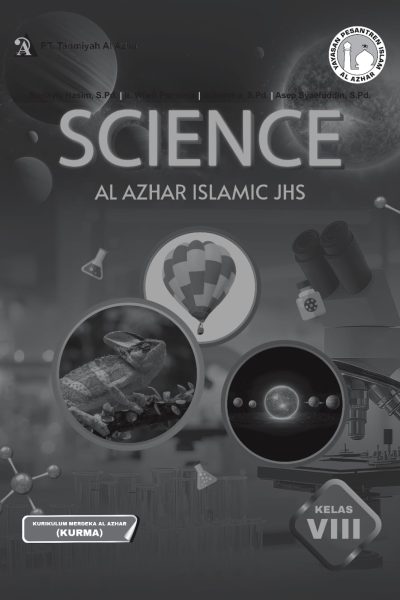
General Framework for 8th Grade Natural Science (Independent Curriculum)
The Independent Curriculum in Indonesia emphasizes student-centered learning, flexibility, and in-depth understanding. Here’s a possible structure for the Natural Science curriculum:
- Themes/Topics: The curriculum is organized around broad themes rather than rigid subject divisions (though the themes will likely align with core science concepts).
- Flexibility: Schools have the autonomy to adapt the curriculum to their local context and students’ needs.
- Focus on Scientific Skills: Development of skills like observation, questioning, hypothesis formation, experimentation, data analysis, and communication is crucial.
- Relevance: Connecting scientific concepts to real-world issues and students’ daily lives is emphasized.
- Character Building: The independent curriculum also aims to develop students’ character.
Possible Themes and Content for 8th Grade Natural Science at Al Azhar (with Islamic Perspectives)
Here’s a sample outline, keeping in mind the integration of Islamic perspectives:
Theme 1: Exploring Systems in the Human Body
- Content:
- Digestive System: Structure and function, healthy eating habits (connecting to halal and thayib concepts in Islam), food-related diseases.
- Respiratory System: Structure and function, the importance of clean air, effects of pollution (connecting to the Islamic emphasis on environmental stewardship).
- Circulatory System: Structure and function, the importance of blood donation (linking to the Islamic value of helping others).
- Nervous System: Structure and function, the importance of protecting the brain and avoiding harmful substances.
- Excretory System: Structure and function, maintaining bodily purity.
- Skeletal and Muscular Systems: Structure and function, importance of physical health and exercise (connecting to the Islamic emphasis on maintaining a healthy body as a trust from God).
- Islamic Perspectives:
- Emphasize the intricate design of the human body as evidence of God’s creation (Tafakkur).
- Discuss the importance of maintaining good health as a responsibility given by God.
- Connect dietary laws (halal and thayyib) to the digestive system and overall health.
- Discuss the ethics of organ donation and transplantation from an Islamic viewpoint.
Theme 2: Unveiling the Wonders of Ecosystems
- Content:
- Interactions between living things and their environment.
- Food chains and food webs.
- Biotic and abiotic factors.
- Types of ecosystems (e.g., terrestrial, aquatic).
- Environmental issues (e.g., pollution, deforestation, climate change) and their impact.
- Biodiversity and its importance.
- Efforts to conserve and preserve the environment.
- Islamic Perspectives:
- Highlight the concept of Mizan (balance) in the universe, as described in the Quran.
- Emphasize the role of humans as Khalifah (stewards) of the Earth and their responsibility to protect the environment.
- Discuss Islamic teachings on the sustainable use of natural resources.
- Connect the study of ecosystems to verses in the Quran that describe the beauty and diversity of creation.
Theme 3: Delving into the Building Blocks of Matter
- Content:
- Atoms and molecules.
- Elements and compounds.
- States of matter and their changes.
- Physical and chemical changes.
- Acids, bases, and salts.
- Basic chemical reactions.
- Islamic Perspectives:
- Discuss how the study of matter reveals the precision and order in God’s creation.
- Encourage students to reflect on the transformation of substances as signs of God’s power.
Theme 4: Exploring Motion and Energy
- Content:
- Motion, speed, and acceleration.
- Forces and their effects.
- Energy and its forms (e.g., kinetic, potential, heat, light).
- Energy transformations.
- Simple machines.
- Islamic Perspectives:
- Connect the study of motion and energy to the natural laws (Sunnatullah) that govern the universe, as described in the Quran.
- Discuss the importance of using energy responsibly.
Key Features of Learning:
- Inquiry-Based Learning: Students are encouraged to ask questions, investigate, and construct their own understanding.
- Project-Based Learning: Students work on extended projects that integrate multiple concepts and skills.
- Contextual Learning: Connecting science to real-world problems and local contexts.
- Collaborative Learning: Students work together in groups to solve problems and share ideas.
- Integration of Technology: Use of technology for research, data analysis, and presentation.
- Assessment: Authentic assessment methods, such as projects, presentations, and portfolios, are used to evaluate student learning.
Additional Considerations for Al Azhar Schools:
- Arabic Language: Where appropriate, scientific terms can be introduced in Arabic, connecting to the broader curriculum at Al Azhar.
- Islamic Values: The curriculum should reinforce Islamic values such as responsibility, honesty, respect for nature, and the pursuit of knowledge.
- Community Engagement: Students may be involved in community projects related to environmental issues or health.